Scientific Committee
Alexandra Stergiou
President of Scientific Committee
Alexandra serves as a vice president of HETI, holds the chair of the Research Committee, as well as, is the Chief Editor of HETI Scientific Journal. She has taken part in numerous scientific conferences and served as a member of organizing and scientific boards. Also, she has attained and announced many oral and poster presentations at congresses and published numerous articles in international scientific journals.
Originally from Ioannina, Greece, Alexandra holds a PhD from the Department of Physical Medicine and Rehabilitation of the Medical School of the University of Ioannina and currently is a lecturer in the field of Special Education at the University of Ioannina, Greece. Her research interest is in the rehabilitation of children with neurological disorders. In addition, she is running her own business at Ioannina Therapeutic Riding Centre, Greece for the last 15 years.

Emily Kieson
Emily Kieson (PhD, MS, PgDip) serves as Executive Director at Equine International, a US-based nonprofit focused on research, education, and outreach in the fields of equine behavior, welfare, and equine-human interactions. Her current research focuses on equine affiliative behaviors and social bonding behaviors to study how horses create and maintain social bonds to provide insight into the horse-human relationship. The goal is to use this knowledge to help horse owners build better social relationships with their horses, improve assessment of equine well-being, and improve practices in equine-assisted services. www.equineintl.org
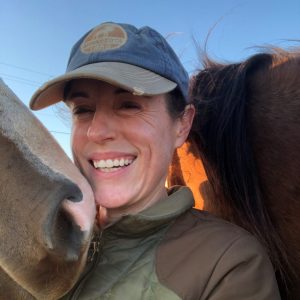
Prof. Selcuk Akpinar
Prof. Selcuk Akpinar is currently employed at Nevsehir Haci Bektas VeliUniversity at the Faculty of Education, Department of Physical Education and Sport as a Faculty Member. He finished his bachelor degree with honors (first rank position) at Hatay Mustafa Kemal University. He was assigned to be a Physical Education Teacher by the Ministry of Education. He worked as PE teacher for two years. He continued his study as a Master at BoluAbant Izzet Baysal University where he became a research assistant. Later on, he moved to Middle East Technical University for the doctorate where he focused on motor learning and control studies. During his doctorate, he went to the Penn State University, USA, as a visiting scholar for one and a half years and later on Post-doc for 6 months. During his state at the Penn State University, he worked at a motor control laboratory and tried to find out the effect of participation of sports training on motor lateralization. After completing his doctorate, he moved to Nevsehir. He was promoted as an Associated Prof by the Higher Educational Council of Turkey in December 2017. He was promoted by Nevsehir Haci Bektas Veli University as full professor on February 2023. He has started working in Equine Assisted Activities in Nevsehir in 2013. He participated Erasmus + Projects in Equine Assisted Activities and has been conducting research in this topic. He is also assistant principal of Horsemanship-Horseback Riding Application and Research Center at Nevsehir Haci BektasVeli University. He also published articles in respected international journals in this topic, too. He has developed many international cooperation and has many colleagues from all over the world. His area of interest mainly focused on motor lateralization in sports and equine assisted activities, such as arm selection, motor learning and pedagogy, as well as body composition.

Sanna Matila Rautiainen
Sanna currently holds a shared doctoral position at the University of Eastern Finland in sports and exercise medicine and is working in the field of EAS (physical therapy) in her own company. She served HETI as a board member from 2003-2009 as a vice-president and HETI Journal editor and from 2015-2021 as president of HETI Federation during the transfer of the office from the USA to Ireland and the COVID- pandemic. Sanna has a main interest in biomechanics combining human and equine movement and pain management. She has completed studies with chronic low back pain patients treating them from a physical therapy perspective and published several articles on it. Sanna has been teaching in Equine College courses of equine facilitated therapies (in Finland) and has held several international courses on biomechanics. She has also been involved in several international EU-funded projects where EAS education has been developed.
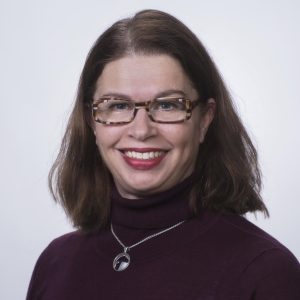
Dr. Anne Barnfield
Originally from England, Dr. Anne Barnfield holds a B.Sc. from the University of London, Great Britain, and a Ph.D. in Experimental Psychology from the University of Sussex, Great Britain. Anne currently is an Associate Professor of Psychology at Brescia University College (affiliated with the University of Western Ontario), in London, Ontario, Canada. A member of several professional organizations relating to human-animal interactions, and working for HETI on the Ethics Taskforce and the Research and Education committee, Anne is interested in the beneficial psychological effects of physical activity and particularly the effects of interactions involving equines. Although involved in a number of different types of studies, Anne’s current research area is equine-assisted/facilitated activities: the beneficial influences of Therapeutic Riding (TR) for children with special needs, and applications of Equine-Assisted Therapy/Psychotherapy (EAT/P) in treatment of anxiety and post-traumatic stress disorder (PTSD) for Military Veterans and Emergency Services Personnel. In her free time Anne volunteers at the local TR centre, practices karate, and rides her own horse “Lilliput”. Anne lives in London, Ontario, with her husband Richard (a Political Sciences Professor).
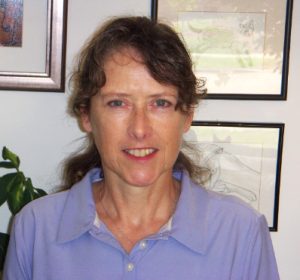
Hilde Westgaard Langeland
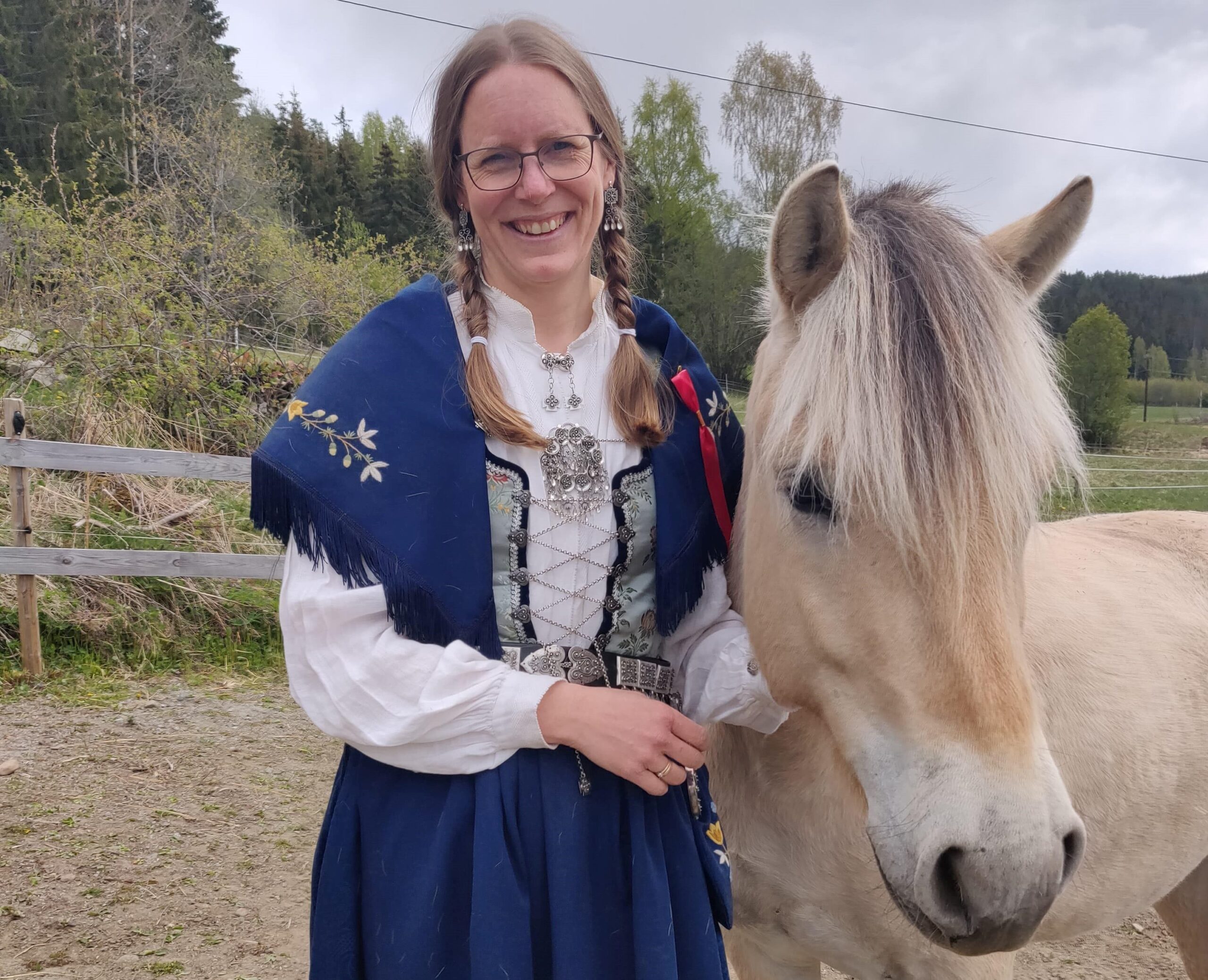
Hilde Langeland Westgaard is a Norwegian public health researcher and practitioner whose work centers on horses in health promotion and youth development. She holds a PhD in public health on how interaction with horses can support adolescents’ development. She is trained as a teacher and counsellor and runs an Inn på tunet care farm, where she receives pupils who need support with life‑mastery and coping skills. She is responsible for the subject area Society and Public Health at the Norwegian Horse Centre, where she has developed the course “Hest i livsmestring” (Horses in life‑mastery). Hilde is also the academic lead for Hest og Helse’s continuing education in horse‑assisted interventions at NMBU (Norwegian University of Life Sciences). She has previously served a total of ten years on the board of Hest og Helse and is strongly engaged in the use of horses in health‑promoting work.
Susanna Hedenborg
Susanna Hedenborg is a Swedish professor of sports science at Malmö University and an associate professor (docent) in economic and social history. Her research focuses on:Sports history and sports science, especially equestrian sport. Childhood history and demographics, including the conditions of children in 18th‑century Stockholm. Work and gender relations in horse racing and equestrian culture, including riding schools, trainers, jockeys, and media representations. She earned her PhD in economic history in 1997 with a dissertation on views of and conditions for children in 18th‑century Stockholm and later became professor of sports science in 2009. She has written numerous scholarly works on gender and equestrian sport and has also co‑authored widely used history textbooks for upper‑secondary school and higher education, for which she received a Swedish national teaching materials award in 2012.
Hernika Jormfelt
Henrika Jormfeldt from Sweden has lived together with horses since she got her first pony at her seventh anniversary in 1973. She graduated as a registered nurse specialising in psychiatric care in 1993 and defended her PhD thesis Dimensions of Health among Patients in Mental Health Services in 2007 at Lund University. Henrika Jormfeldt became a Professor of Nursing at Halmstad University in 2019. She is the chief editor of the International Journal of Qualitative Studies on Health and Well-being, chair of IFSAP Halmstad (the local association of persons with schizophrenia and other forms of psychoses). Henrika Jormfeldt runs a little firm offering equine-assisted therapy and activities for people with mental illness and conducts research on how horses can contribute to the treatment of mental illness.

Petra Andersson
Petra Andersson is a Swedish researcher and philosopher specializing in environmental ethics, animal ethics, and equine culture. She earned her PhD in 2007 with a dissertation in environmental ethics and has since pursued interdisciplinary research bridging the humanities and social sciences. After her doctorate, she worked at Chalmers University of Technology, coordinating and initiating research in industrial recycling. Currently, she collaborates with the Gothenburg Environmental Science Centre (GMV), focusing on strategies to help the Västra Götaland Region achieve its fossil-free goals.Her equine-related research includes studies on horse welfare, media portrayals of “horse girls,” and how gender shapes the depiction of elite riders in sports journalism. She is part of the project Equine Cultures in Transition, funded by the Baltic Sea Foundation, which explores how perceptions of horses influence ethical views on human–animal relationships.Andersson is an active public communicator, writing regularly as the “house philosopher” for Hippson Magazine and as a columnist for hippson.se. She lectures widely on topics related to horse welfare, ethics, and environmental issues, and contributes to the Network for Social Science and Humanities Horse Research, which aims to strengthen and promote research in this field.She has taught philosophy and education at several Swedish universities since 1998 and now mainly supervises theses and gives lectures on environment and sustainable development
Marit Sørensen
Marit Sørensen is a Norwegian professor of sport and exercise psychology at the Norwegian School of Sport Sciences (Norges idrettshøgskole, NIH). She works at the Section for Coaching and Psychology, where her expertise includes motivation, coaching, mental aspects of training, and physical activity.
Inês Pereira de Figueiredo
With a PhD in Neurosciences University of Salamanca, Spain, and a Master Degree in Zootechnical Engineering, from the University of Evora, Portugal, she made her fellowship and Graduation Thesis, at INRA, Tours, at Centre de Bien Être Animal et Ethologie , in France.
Coordinator of some Research Projects regarding the field of “The effects of handling foals on their reactivity, learning ,and Human-animal relationships”, at the National Stud Farm. Author of several Research Articles focusing on the effects of stress in emotional outcomes and learning, posttraumatic stress disorder and depression-like models.
At the moment , she is Collaborator at the Institute of Neurosciences of Castilla y Leon, and the Faculty of Veterinary in the Laboratory of Animal welfare and Behaviour. Founder and President of the International organization THEKIDSFELLOWs Research Group in Anthrozoology, is working in some international Projects.
She is Academic member of the International Society for Equitation Sciences (ISES) and Associate Editor of HETI, The Federation of Horses in Education and Therapy International.

Aurora Margrethe Brønstad
Aurora Margrethe Brønstad is a Norwegian veterinarian and researcher who specializes in laboratory animal science and animal ethics. She works at the University of Bergen (UiB), where she is a researcher and chief veterinarian connected to laboratory animal facilities and clinical departments. Her PhD is in physiology from the University of Bergen, and she is also educated as a veterinarian from the former Norwegian School of Veterinary Science. Brønstad is well known for her work on harm–benefit analysis in animal experiments, the 3Rs (Replacement, Reduction, Refinement), and ethical guidelines for the use of animals in research. She has contributed to international working groups (AALAS–FELASA) on harm–benefit assessment and has many publications on ethical approval processes, humane endpoints, and refinement in animal research. In 2024 she received Norecopa’s 3R prize for long-standing efforts in teaching laboratory animal science and promoting animal welfare in research.